
DORIAN TRADER​​

Why Adjustments Matter More Than Predictions in 1DTE and 7DTE Trading

Owanzer Stafford, Dorian Trader Club Member

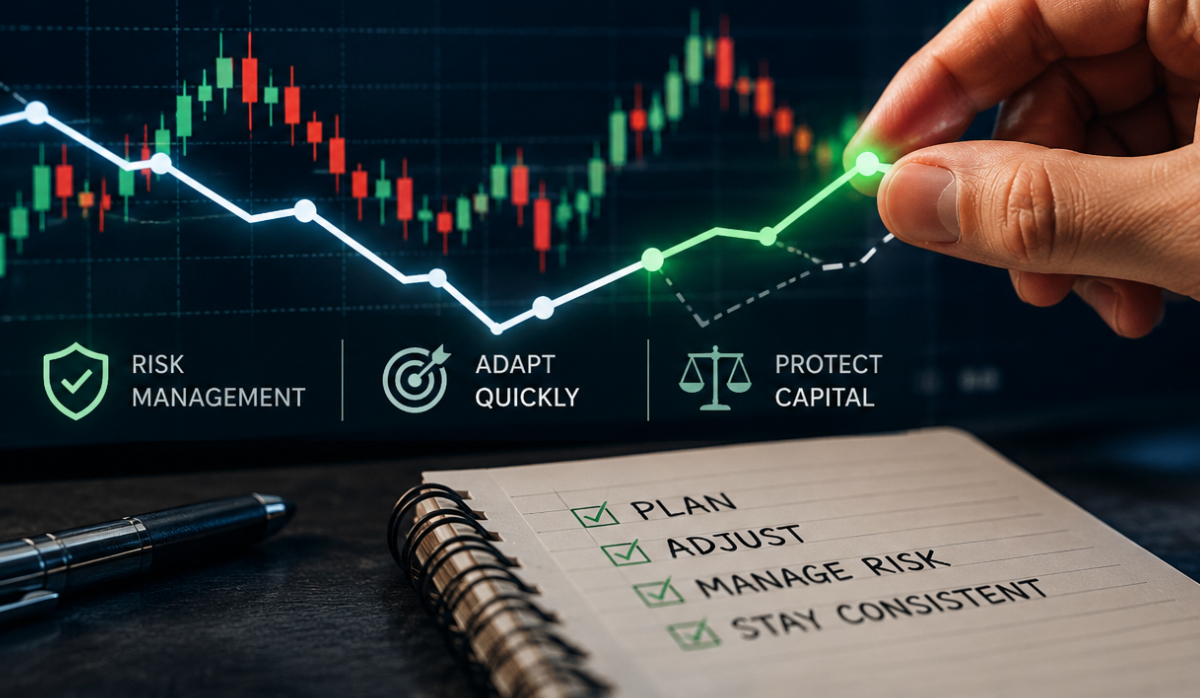
One of the biggest misconceptions about short-term options trading is that success comes from always predicting market direction correctly. It doesn’t. After years of trading and working with traders inside our community, I’ve found that the real edge in strategies like 1DTE and 7DTE trading often comes from something far less exciting — the ability to adjust when the market dictates.

1DTE and 7DTE trading

That may not sound glamorous, but it is one of the most important truths in active trading.

Markets are dynamic. Conditions change quickly. Momentum shifts. Volatility expands and contracts. What looked like a perfect setup in the morning can become a completely different trade by the afternoon.

The traders who survive long term are rarely the ones trying to prove they are right. They are the ones who know how to respond.

What Makes 1DTE and 7DTE Trading Different?

Short-duration trades such as 1DTE (one day to expiration) and 7DTE (seven days to expiration) require a completely different mindset than long-term investing.

Time becomes both an opportunity and a risk.

With shorter-duration contracts:

Price movement matters more immediately

Volatility changes can impact premiums quickly

Trade management becomes critical

Theta decay accelerates rapidly

That speed is what attracts many traders to these strategies.

But speed also magnifies mistakes. A trader who refuses to adapt can lose control of a short-term trade very quickly. This is why I constantly emphasize preparation over prediction.

Before entering a trade, I want to know: 

Where the market could invalidate the setup

What adjustment options are available

How much capital is at risk

Whether the trade still makes sense if conditions change

That framework matters far more than trying to forecast every market move perfectly.

The Importance of Trade Adjustments

Another major concept we emphasize inside the community is that many of these short-term trades are often planned before the market session even begins. In many cases, we structure positions the day before expiration instead of reacting emotionally after the open. That preparation matters.

It allows us to think clearly about:

Potential market direction

Key support and resistance levels

Hedging opportunities

Risk exposure

Adjustment plans if momentum changes

One of the biggest misconceptions about short-duration trading is that traders must simply “hope” the market moves in their favor. That is not how professional traders approach risk.

We regularly discuss hedging strategies designed to help buffer positions when the market temporarily moves against us. Those hedges are not perfect protections, and they do not eliminate risk entirely, but they can help reduce the impact of volatility during difficult sessions.

Sometimes the best decision is not forcing a 1DTE trade at all. There are market environments where extending duration to a 7DTE structure or another slightly longer-term setup simply provides better probabilities and more flexibility.

That adjustment in mindset is important.

Good traders do not marry a strategy.

They adapt to the conditions the market is actually giving them.

One of the biggest topics we discussed recently inside the community was rollout adjustments when the market begins moving against your original position.

One of the biggest topics we discussed recently inside the community was rollout adjustments when the market begins moving against your original position.

Many traders enter short-term trades believing they only have two choices:

Win big

Take a full loss

Professional traders understand there is often a third option: adjustment. An adjustment does not guarantee success. But it can allow traders to reduce risk, buy more time, reposition strikes, or improve probability depending on market conditions. That is especially important in fast-moving environments where indexes like SPX can reverse aggressively within hours.

The key is understanding that adjustments should be part of the plan before the trade is ever entered. Emotional adjustments made in panic are rarely effective. Strategic adjustments made with discipline are completely different.

Inside our community, we spend significant time discussing not only trade entries, but also:

Position management

Strike selection

Timing considerations

Exit planning

Market context

When not to trade

Those conversations are often what separate developing traders from consistently disciplined traders.

Want to learn why great risk managers outperform great traders? Watch this video.

Managing Losses Is Part of Winning

One of the hardest lessons for newer traders to accept is that successful trading is not about avoiding losses entirely. Losses are part of the business. The real danger usually comes from refusing to accept small losses before they become devastating ones. In short-term options trading, avoiding a blowout loss can dramatically improve long-term performance. That is especially true when combined with a strong overall win rate.

Many traders destroy weeks or months of progress because they allow one emotional trade to spiral out of control. Professional traders understand that protecting capital is part of staying in the game long enough to capitalize on future opportunities. Sometimes the smartest trade is the one you exit early.

Not because the strategy failed forever, but because the market conditions changed. That level of discipline is often what separates long-term traders from traders who burn out emotionally and financially. At the same time, disciplined traders also understand when the market is confirming their position. When momentum, structure, and participation align, there are moments when adding to a winning trade makes sense.

Not recklessly.

Not emotionally.

But strategically, when the market is clearly signaling continuation.

Learning that balance between cutting weakness and pressing strength is one of the most important skills active traders can develop.

Flexibility Is a Competitive Advantage

One of the most overlooked skills in trading is flexibility. Many traders become emotionally attached to their market bias. If they believe the market should move higher, they continue forcing bullish trades even after price action weakens. If they believe a selloff is coming, they fight the trend repeatedly trying to call a top.

That rigidity can become expensive. In short-term trading, flexibility is often a competitive advantage. The market does not care about opinions. It only responds to order flow, liquidity, momentum, and participation. The traders who adapt fastest usually place themselves in the best long-term position. That does not mean constantly changing strategies every hour. It means understanding that successful traders react to evidence instead of emotion.

Becoming the Trader You Need to Be

One of the deeper truths about trading is that markets eventually force personal growth. Every trader enters the market wanting fast success. But difficult market environments reveal habits, weaknesses, emotional triggers, and discipline problems very quickly.

During challenging stretches, the goal is not simply surviving the next trade.

It is developing into the type of trader you not only want to become — but the type of trader you need to become.

That means learning:

Patience during uncertainty

Discipline during volatility

Emotional control after losses

Confidence without arrogance

Adaptability when conditions shift

The market rewards consistency far more than excitement.

And consistency is usually built during the toughest periods, not the easiest ones.

Why Community and Education Matter

One thing I have learned over time is that most traders do not struggle because of a lack of indicators. They struggle because they lack process. They enter trades without a clear plan. They oversize positions. They panic during volatility. Or they fail to understand how options pricing behaves as expiration approaches. That is exactly why structured education and live trade discussions matter.

Inside the Dorian Trader Club, we focus heavily on helping traders understand the “why” behind decisions.

Not just alerts. Not blind entries.

But real education around:

Risk management

Trade structure

Market conditions

Adjustment techniques

Timing and execution

Emotional discipline

Because ultimately, consistency in trading rarely comes from finding a magical indicator.

It comes from building repeatable habits.

Final Thoughts

There are no guarantees in trading.

Anyone promising effortless profits in 1DTE or 7DTE strategies is not being realistic. Short-term options trading can create opportunities for income generation and account growth, but it also requires discipline, preparation, and the ability to adapt when the market changes. The traders who last are usually not the ones making emotional decisions. They are the ones managing risk, adjusting intelligently, and staying consistent through different market environments.

That is the culture we continue building inside the Dorian Trader Club. If you want to learn how experienced traders manage short-term options trades, navigate volatility, and develop a more professional trading process, now is the perfect time to join our growing community. 

Join the Dorian Trader Club today and start learning how disciplined traders approach the market with structure, flexibility, and confidence.

Ready to Begin?

Start with structure, trade with confidence

Join the Dorian Trader Club

Start learning today and take control of your trading journey.
Click Here
Rules

1. Lorem ipsum dolor sit amet, consectetur adipiscing elit. Ut elit tellus, luctus nec ullamcorper mattis, pulvinar dapibus leo.