
Don’t think most traders fail just because they don’t know enough strategies. But they fail because they really don’t have a clear trading routine. You’ll find them following price action someday, and the next day? They copy a signal.
Interestingly, then they switch to a new indicator after two losses.
This creates confusion.
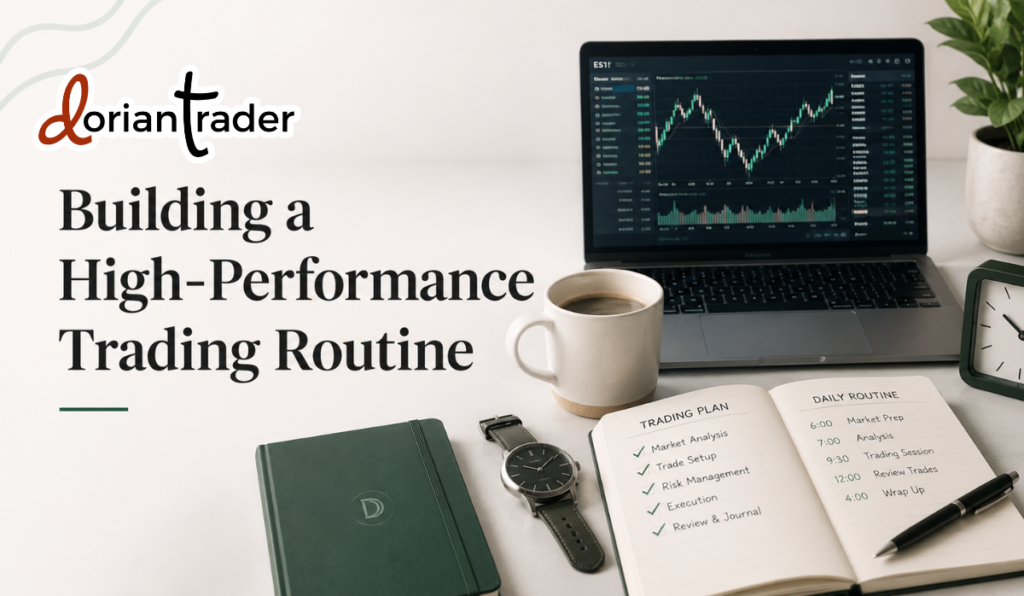
A strong trading routine solves this problem. You can have a structure to your day. Not only that, but the routine also helps you prepare, trade, review, and improve with discipline. Trading is not only about finding entries. And most importantly, it is also about protecting your mind, managing risk, and repeating the right habits every day.
A trading routine is not just a daily checklist. It is a complete system that guides your behaviour before, during, and after trading. The market can move fast. Prices can change within seconds. News can create sudden volatility. Without a routine, traders often react emotionally.
A good routine helps you slow down. It tells you when to trade and when to wait. It keeps you focused on quality setups. It also helps you avoid random decisions. Over time, this can make your trading more stable and professional.
Consistency matters more than one big win. A trader can win one trade by luck. But long-term progress needs repeatable actions. When you follow the same preparation, risk rules, and review process, your trading becomes more measurable.
You can see what works. You can also spot what keeps hurting your results. This is how improvement begins.
Trading can trigger fear, greed, hope, and frustration. These emotions are normal. But they can damage your account if they control your decisions.
A routine gives you rules to follow. You enter because the setup matches your plan. You exit because your plan says so. You do not trade only because you feel excited or desperate.
Real trading confidence does not come from winning every trade. It comes from knowing that you have a process. When your routine is clear, you feel less lost. Even after a loss, you know what to review and what to improve.
The best trading decisions often happen before the trade. Preparation helps you understand the market condition. It also helps you avoid surprises.
Do not open your platform and start searching for random trades. Start with a calm review. Look at the bigger picture first. Then move into the smaller details.
 Check the Economic Calendar
News can move the market quickly. Interest rate decisions, inflation reports, employment data, and central bank speeches can create strong volatility. This is very important for forex traders.
Before trading, check if any major news is coming. You do not always need to avoid news completely. But you should know when it may affect your trade.
Understand the Market ConditionAsk yourself a simple question. Is the market trending, ranging, or moving without direction?
A trend-following setup may work well in a trending market. But it may fail in a sideways market. A range strategy may work in consolidation. But it may suffer during breakouts. Your routine should help you match your strategy with the market condition.
Mark Key Price LevelsMark support and resistance zones. Also look at previous highs, previous lows, supply and demand areas, and psychological levels.
These levels help you plan better trades. They also help you avoid entering poor locations. A good setup at a bad level can still become a weak trade.
Pro TipSpend more time preparing than placing trades. Mark your key price zones in advance, so you are not reacting in panic when the market starts moving. When price reaches those areas, you should already know what to look for, what to avoid, and how to respond with a clear plan.
A trading routine needs a trading plan. Without a plan, every price move can look like an opportunity. That is dangerous.
Your trading plan should answer the basic questions. What will you trade? When will you trade? What setup will you use? How much will you risk? When will you stop trading for the day?
Keep the plan simple. A complicated plan can be hard to follow. A simple plan with clear rules is often more useful.
Define Your Trading StyleYour trading style should match your lifestyle. If you are busy during the day, scalping may not suit you. If you can check charts a few times a day, swing trading may be better.
Some traders like fast decisions. Others prefer slow and planned trades. There is no perfect style for everyone. The right style is the one you can follow with discipline.
Create Entry RulesYou should know exactly what needs to happen before you enter a trade. For example, you may wait for a breakout and retest. Or you may wait for the price to reach a support zone and show confirmation.
The key is clarity. If your entry rule is not clear, you will enter too early or too late.
Create Exit RulesMany traders focus only on entries. But exits are just as important. You should know where your stop loss will be. You should also know where you will take profit.
Do not decide everything after entering. That creates emotional pressure. Plan your exit before the trade begins.
Set Your Risk Per TradeRisk should never be random. A common approach is to risk a small fixed percentage of your account per trade. Many traders use 1% or 2%.
This helps protect your capital. It also keeps one losing trade from damaging your confidence too much.
A strong routine also depends on the quality of your information. Many traders lose focus because they follow too many random sources. One person says buy. Another says sell. A third person says wait. This creates noise.
Use resources that improve your understanding. Do not rely only on hype, screenshots, or emotional opinions.
Dorian Trader can be a useful platform for traders who want to explore market education, stock trading ideas, and practical trading concepts. It can support your learning process when you want to understand market behavior in a more structured way.
At the same time, broker selection is also part of your routine. A poor broker can affect your spreads, execution, withdrawals, and overall trading experience. This is why many traders compare broker conditions before opening an account.
For broker research and market comparison, Asia’s leading forex broker review platform can help traders make better decisions with more confidence.
Verify Broker ConditionsA good strategy can still suffer with poor trading conditions. Spreads matter. Commission matters. Execution speed matters. Withdrawal reliability also matters.
Before choosing a broker, compare account types, trading costs, regulation, and user experience. This should be part of your routine, not an afterthought.
Avoid Too Many OpinionsToo much information can hurt your trading. If you follow ten different analysts, you may become confused. Your routine should limit noise.
Choose a few trusted resources. Then focus on your own analysis.
Do Not Depend Only on SignalsSignals can be helpful sometimes. But full dependency can stop your growth. If you do not understand why a trade makes sense, you are not building skill.
A better routine is to use ideas as learning material. Study the logic. Compare it with your plan. Then decide carefully.
 Quick Trivia
A strategy may look profitable on a chart. But real trading can be different. Spreads, slippage, emotions, and execution delays can change the result. That is why testing under real conditions is so important.
A pre-trade checklist is simple. But it can improve discipline quickly. It forces you to pause before entering.
Many bad trades happen because traders act too fast. They see a candle moving and jump in. Later, they realized the setup was weak. A checklist helps prevent this. Your checklist does not need to be long. It only needs to cover the most important points.
Ask the Right QuestionsBefore entering, ask yourself a few questions.
If the answer is weak, skip the trade.
Confirm Risk-to-RewardRisk-to-reward is important. If you risk $100 to make $50, your trade needs a very high win rate. That can be difficult.
Many traders prefer setups where the possible reward is greater than the risk. For example, a 1:2 risk-to-reward ratio means you risk one part to make two parts.
Check Your Emotional StateYour mindset matters. Do not trade when you are angry, tired, or desperate. Also avoid trading only because you want to recover a previous loss.
A good routine protects you from yourself. Sometimes the best trade is no trade.
Entering a trade is only the beginning. Managing the trade is where many traders struggle.
Some close winners too early. Some hold losers for too long. Some move the stop loss because they hope the market will reverse. These habits can destroy a good strategy.
Your trading routine should include rules for managing open positions. Once the trade is active, follow the plan.
Do Not Move Stop Loss EmotionallyYour stop loss should have a reason. It should be placed before the trade begins. If price hits that level, the trade idea is likely wrong.
Moving the stop loss further away can increase risk. It may also turn a small planned loss into a large emotional loss.
Let Good Trades BreatheNot every small pullback means the trade is failing. Markets move in waves. If your trade is still following the plan, let it develop.
This is especially important for swing traders. Watching every small candle can create stress. It can also push you to exit too early.
Know When to Stop for the DayA daily stop limit can protect your account. For example, you may decide to stop trading after two losses or after reaching a certain loss amount.
This rule prevents revenge trading. It also gives your mind time to reset.
Did You Know?Not trading is also a professional decision. Many experienced traders improve when they stop chasing every move. They focus only on high-quality setups.
A trading journal is one of the most powerful tools for improvement. It shows you the truth about your trading.
Memory is not enough. You may think you know your mistakes. But a journal can reveal patterns you did not notice.
Your journal should include more than profit and loss. It should explain why you took the trade and how you felt during the trade.
Record Trade DetailsWrite down the pair, stock, or asset name. Add your entry, stop loss, take profit, position size, and final result.
Also include screenshots before and after the trade. This helps you review the setup later.
Record Your EmotionsYour emotional state is important. Were you calm? Were you impatient? Did you enter because of fear of missing out? Did you move your stop loss?
These notes can help you understand your trading behavior.
Review Every WeekA weekly review can improve your routine. Look at your best trades and your worst trades.
Ask simple questions. Which setups worked best? Which trades should I have skipped? Did I follow my rules? What mistake appeared more than once?
The goal is not to blame yourself. The goal is to improve next week.
Trading is mentally demanding. You need focus, patience, and emotional control. If you are tired, distracted, or stressed, your decisions may become weaker.
A high-performance routine should protect your energy. Your lifestyle affects your trading more than you may think.
Set Fixed Trading HoursDo not watch charts all day without purpose. Choose trading hours that match your strategy.
Forex traders may focus on the London session, New York session, or the overlap between them. Stock traders may focus on market open or certain high-volume periods.
Fixed hours help you stay focused. They also help you avoid burnout.
Take Breaks After LossesLosses are part of trading. But emotional reaction after a loss can be dangerous.
After a loss, take a short break. Step away from the screen. Review the trade later with a clear mind. This can stop one loss from becoming a bad trading day.
Build a Healthy Routine Outside TradingSleep matters. Exercise matters. Food matters. A tired trader can make poor decisions. A stressed trader can break rules.
You do not need a perfect lifestyle. But you do need basic discipline. A clear mind can protect your account.
Many traders change strategies too quickly. They try one method for a few days. Then they move to another after a small losing streak. This creates endless confusion.
A better approach is to test, track, and improve slowly. Give your strategy enough time. Study the data. Then make small adjustments.
Separate Bad Strategy from Bad ExecutionSometimes the strategy is not the problem. The problem is execution. Maybe you entered late. Maybe you ignored the checklist. Maybe you risked too much.
Your journal will help you see the difference.
Make One Change at a TimeDo not change everything at once. If you change your entry, exit, timeframe, and risk rule together, you will not know what improved the result.
Make one change. Test it. Review the outcome. Then decide the next step.
Focus on Process FirstProfit is important. But the process comes first. A good process can produce better results over time. A random win can make you feel good for one day, but it does not build skill.
High-performance traders respect the process. They know the routine is what keeps them stable.
A trading routine is a structured process for preparing, trading, managing risk, and reviewing performance. It helps traders make better decisions with less emotion.
It builds consistency. It also reduces random trades. A routine helps you follow your plan, manage risk, and improve over time.
It depends on your trading style. A day trader may need 30 to 60 minutes of preparation. A swing trader may need more weekly planning and less daily screen time.
Yes. Beginners need a routine from the start. It helps them avoid overtrading, emotional entries, and poor risk management.
Include entry, exit, stop loss, take profit, risk amount, result, screenshots, reason for entry, and emotional notes. Review it weekly.
You can, but it is risky. Without a routine, you may depend too much on emotion, luck, or random signals. That makes long-term consistency harder.
Building a high-performance trading routine is not about making trading complicated. It is about making your actions clear and repeatable. The market will always be uncertain. But your behavior can be structured.
Start with preparation. Build a simple trading plan. Use reliable resources. Check your setup before entering. Manage trades with discipline. Keep a journal. Protect your energy. Then improve slowly.
Great traders are not created by one lucky trade. They are built through daily habits. A strong routine helps you trade with more patience, more control, and more confidence. In the long run, that routine can become one of your biggest trading advantages.
1. Lorem ipsum dolor sit amet, consectetur adipiscing elit. Ut elit tellus, luctus nec ullamcorper mattis, pulvinar dapibus leo.