
For mid-career professionals and soon-to-retire couples, building a strong Retirement Safety Net is essential for protecting long-term financial security. Social Security may not provide enough income to cover every need, creating real retirement income challenges as bills continue and financial flexibility shrinks.

Medicare limitations often surprise people who assume healthcare is “handled,” even as later-life healthcare costs rise and gaps in the healthcare safety net show up in everyday decisions. The payoff of planning beyond these programs is a retirement that can keep pace with both monthly living expenses and medical uncertainty.
If Social Security and Medicare cover only part of the picture, your job is to build the “other half”: cash reserves, insurance, and multiple income streams that can handle both everyday bills and surprise health costs.
Start with a small, specific target (for example, one month of core expenses) and automate weekly transfers to a separate savings account. A clear target matters because set a goal creates momentum and reduces the urge to tap retirement accounts when life happens. Once you hit the first milestone, expand toward 3–6 months of essentials, especially if you’re within 10 years of retirement.
Your ability to earn is often your biggest asset before retirement, and an illness or injury can derail savings fast. Confirm what coverage your employer provides, then price a supplemental policy if you’d struggle on the employer benefit alone. Focus on the definition of disability, the waiting period (how long before benefits start), and whether benefits keep pace with inflation.
If you’re covered by a high-deductible health plan, prioritize contributing to a health savings account and investing the balance once you’ve built a small cash cushion for near-term medical bills. Save receipts and keep good records so you can reimburse yourself later, potentially years later, if you need flexible retirement cash flow. Treat the HSA as a dedicated pool for premiums, deductibles, dental/vision, and other out-of-pocket costs that Medicare doesn’t fully eliminate.
Medicare’s coverage for extended custodial care is limited, so decide early how you’ll handle a multi-year need for help at home or in a facility. Compare long-term care insurance, hybrid life/LTC policies, and a self-funding plan (a dedicated “care bucket” invested conservatively as retirement approaches). Start by estimating what you could afford monthly and what level of care would be “good enough” in your community.
Map future income sources into “guaranteed” (Social Security, pensions, annuities if used) and “variable” (investments, part-time work, rental income). The goal is to avoid selling investments in a downturn just to pay bills, especially when healthcare costs spike. A simple step you can take today is to set a target percentage for each source and review it annually.
Segment savings by time horizon: cash for 0–2 years, conservative investments for 3–5 years, and growth-oriented investments for 6+ years. This “bucket” approach can reduce panic selling and gives you options if markets drop right when you retire. Rebalance on a set schedule (such as once or twice a year) rather than reacting to headlines.
Building a more diversified financial future often starts with education. If you’re interested in learning how options trading works and exploring strategies that may complement your broader financial goals, our structured courses can help you build your knowledge step by step.
Higher income can shorten the time it takes to build reserves, pay premiums, or fund an HSA, especially if you can work a little longer or shift into less physically demanding roles. Identify one skill gap that limits your pay or flexibility, then choose a realistic upgrade path (certificate, targeted coursework, or a flexible graduate program) with a clear ROI goal. Even modest income gains can make insurance and savings plans sustainable for the long haul.
Even with multiple ways to fund retirement and care, raising your earning power can give you more room to save and more flexibility later. Going back to school to sharpen your skills can be a practical way to position yourself for higher-paying responsibilities and extend your income options as you age. Online degree programs make it easier to keep working full-time while staying on track with coursework. For example, you can earn an MHA online to deepen your healthcare knowledge and build expertise as a leader, skills that may support career advancement and stronger income potential.
A: Start by estimating premiums, deductibles, prescriptions, and dental and vision care, then build a separate “healthcare” savings bucket. A Health Savings Account can help if you use a qualifying plan, since it can cover many medical expenses tax efficiently. Price coverage annually and keep an emergency cushion for surprises.
A: Catch-up contributions let older savers add extra money to certain retirement accounts beyond the usual limit. The IRS explains that elective deferrals are not treated as catch-up contributions until they exceed the standard limit. Ask your plan administrator what your specific plan allows before you adjust payroll deductions.
A: Delaying can increase your monthly check, which may help later in life when work is harder. Balance that with your health, family longevity, and whether your savings can cover the gap. A practical step is to run two scenarios, claiming earlier versus later, and compare how long your savings must last.
A: Keep one to three years of essential spending in cash or short-term, lower volatility holdings so you are not forced to sell at a loss. Rebalance on a schedule, not based on headlines, and review fees that quietly erode returns. If withdrawals are needed, cut discretionary spending first.
A: Yes, but think in layers: a part-time role, a small service business, and a conservative withdrawal plan can work together. Roth IRAs can offer flexibility, since after five years you may be able to withdraw earnings tax-free at 59 1⁄2, as long as you meet the rules described in held a Roth IRA account for five years. Start by testing a small income stream now, while you can refine it without pressure
Retirement security beyond Social Security and Medicare is built in the boring moments: small choices that protect cash flow, health, and flexibility. These habits keep you reviewing the right numbers and behaviors often enough to adjust before problems get expensive.
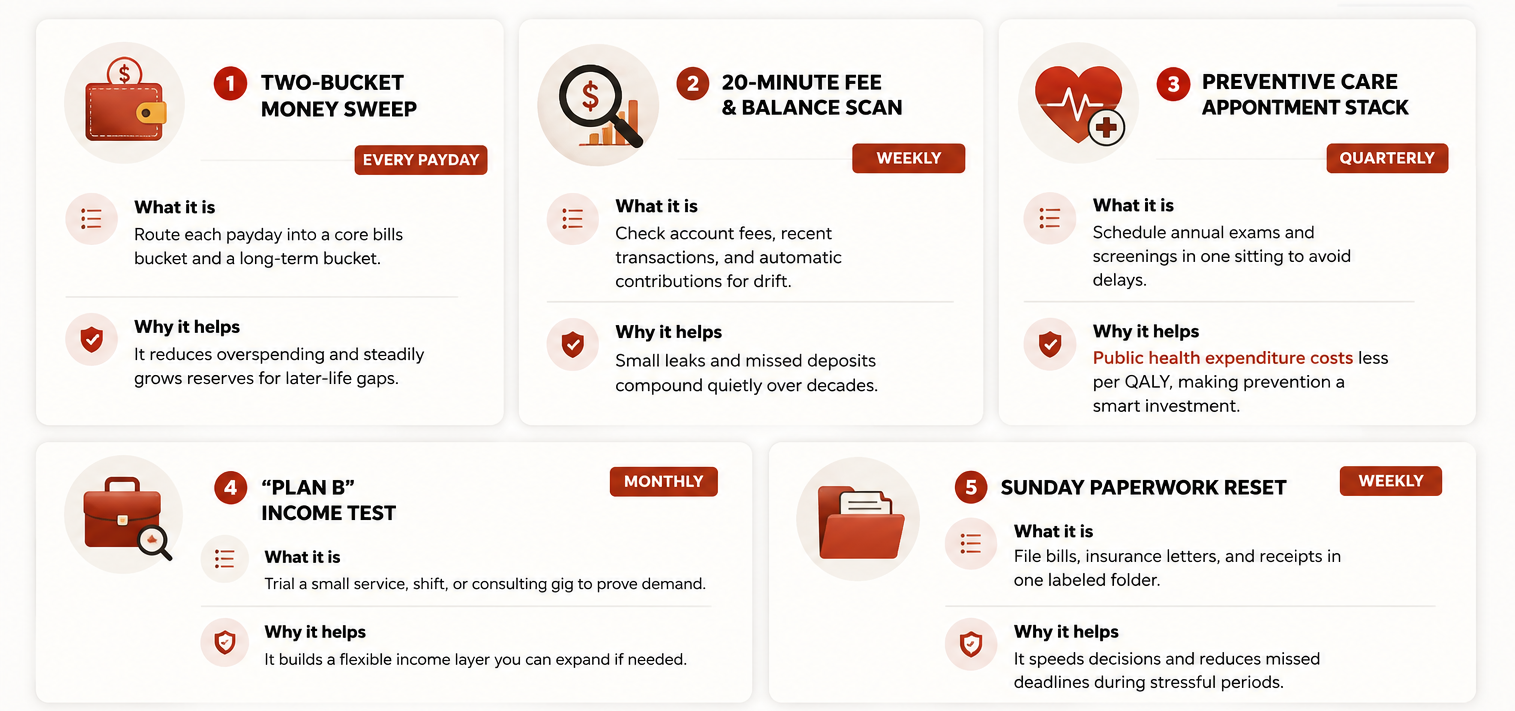
Social Security and Medicare can be a base, but the real challenge is what happens when costs rise and needs change. A self-reliant retirement comes from an approach built on proactive financial planning, long-term healthcare preparedness, and consistently building a personal safety net. Put into practice, those habits turn retirement readiness motivation into calmer decisions, fewer surprises, and more future financial independence. Plan ahead, protect your health, and build your own safety net. Choose one small step this month, review your budget, refresh your savings target, or confirm your healthcare plan’s gaps, and commit to repeating it. That steady follow-through is what creates stability, resilience, and options in the years ahead.
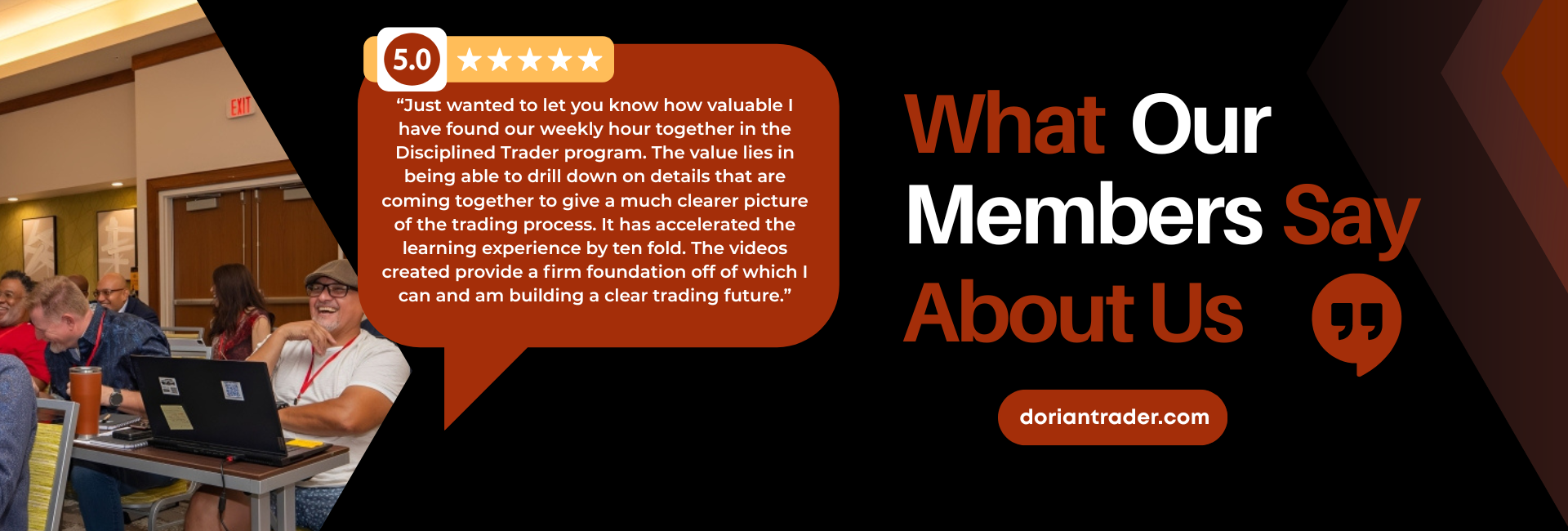
Want to learn more about the Dorian Trader experience? See what our members have to say about their learning journey, the community, and the value they’ve gained along the way.
1. Lorem ipsum dolor sit amet, consectetur adipiscing elit. Ut elit tellus, luctus nec ullamcorper mattis, pulvinar dapibus leo.